Thursday, October 20, 2011

Mr. Sabu Beach. What do I have to do with it?


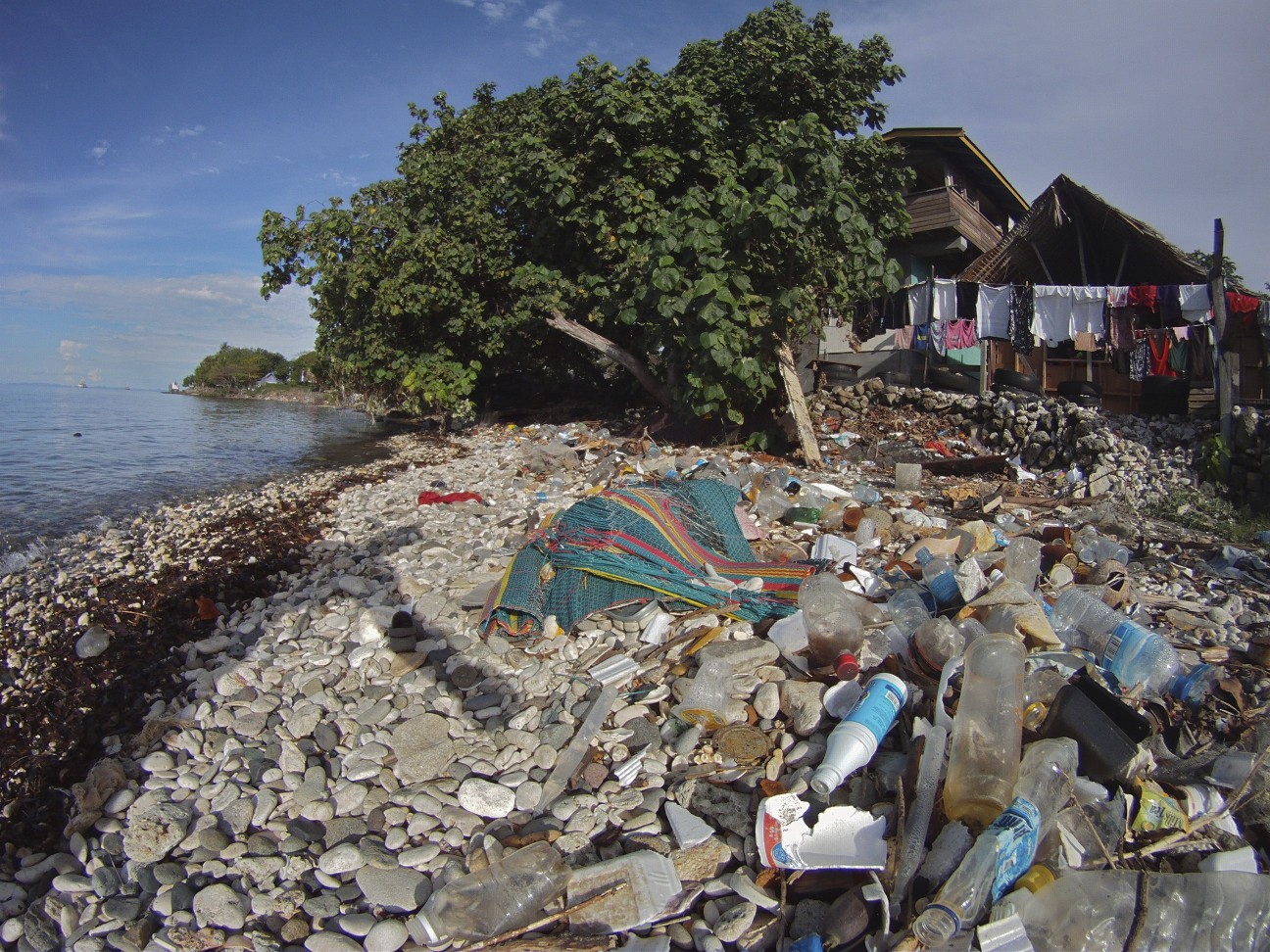
This is the beach of Mr. Sabu:


This is a small bay in the heart of Honiara, the capital of the Solomon Islands. Continuously, tons of garbage such as fishing boats wrecks, plastics, old tires, etc., arrive floating in this place.


After the Second World War, thousands of ships and other war equipment were abandoned in almost all Pacific islands.
Later, the fishing industry continued to use paradise islands to  dump their remainings.

Today, even computer housings are arriving in Mr Sabu's beach.


We asked the Honiara City Council if they could clean the place,  but we were informed that  Mr. Sabu should take care of trash landing on his beach. The answer was something like "this is the law" and " there is no recycling of plastic or tires in the country"!


There is Mr. Sabu. He confessed that in the first years, he tried to keep the beach clean. But...

He's got tired.
Indeed, almost none of these debris were produced in the Solomon Islands. The companies that had explored the business of plastics, bottles, cosmetics, tires, fishing, etc, had systematically abandoned  their "legacies" here after secured their profits selling the products.

Mr. Sabu never had a car, do not buy bottled water, but always lived in this small beach that bears his name. The city of Honiara grew. Himself and another two families are now squeezed between the promenade and the shore, which now has tons of garbage. Again, among these spoils, very little was produced in the Solomon Islands.
The marine life in this place no longer exists. The beauty of the "Sabu's Beach" is completely obscured by the dirt. The health of families living there is compromised. Traditional knowledge, fishing, contemplation of nature; all this had disappeared.
The causes are plural. But I see that  the corporations that sell these products - tires, plastics, ships, etc. - are running their businesses without any concern on life cycle. Bridgestone* - and all other tire manufacturers - haven't  done enough to prevent the end of their products to be like that, as in the photo. I personally shoot it.


* BRIDGESTONE Tires at the beach of your Sabu. He never had a car.
Packaging manufacturers and beverage bottlers act in the same way. Consumers of all these products - many times are ourselves - do not enjoy any better reputation. Something is very wrong in our societies.


This Mr. Sabu does not consume any bottled water. Maybe one shampoo every two years. He does not even buys chlorinated water...
Well, what each one of us has to do with it?
We could consider these questions:
Does the Company I work for is indeed taking care for their products till the end of the life cycle?
When the tire of my car is worn out, do I make sure it is going to be properly recycled or, quietly, I'd be happy to let "Mr. Hole" to kindly dispose it next to Forgotten creek?
As always, your reviews, comments and criticisms are very welcome.

Wednesday, September 7, 2011

REEF CHECK

Coral Reefs, festival of forms and colors - Lelepa, Emae, Maskline, Malekula e Espiritu Santo Islands, Vanuatu.


Coral reefs are biological treasures of the ocean. More varieties of plants and animals live on coral reefs than in any other ocean habitat. Throughout the ages a vast array of animals and plants have become associated with coral reefs, creating some of our earth’s most fascinating, complex and biologically diverse ecosystems. At least 350 million  people and a quarter of all ocean life depend on coral reefs for their food and livelihood.
Corals are coelenterates, a class of animals that also includes sea anemones and jellyfish.They are formed by thousand of tiny polyps grouped in colonies that attach to hard surfaces of the sea floor. Corals are basically carnivorous animals although they do get nourishment from plants, zooxanthellae, with are embedded in their tissues. Corals and zooxanthellae live together in mutually beneficial symbiotic arrangement.   Zooxanthellae gains protection, utilize the carbon dioxide produced by corals respiration for their photosynthesis and use other compounds excreted by corals. On the other hand, corals welcome the oxygen produced by zooxanthellae photosynthesis and gain an efficient elimination system that make them save energy for more important things such as reproduction and growth. Corals are generally nocturnal feeders that make them retract their polyps during the day and expand during the night. So, it is only at night that they can be visible in their complete and colorful forms.
However, the health of coral reef ecosystems is threatened by many problems. Despite the seemingly robust nature of many types, all corals are fragile and can be damaged by the gentlest touch. The most serious impact is caused by human touch. Overfishing, known as predatory fishing, and man-made pollution have devastated numerous coral reefs throughout the world - and it is getting worse. Whether this pollution is in the form of chemicals - insecticides, fertilizers, industrial effluents, etc -, siltation, oil spills, or whatever, the result is the same. Not only the pollutants kill the corals directly, they can kill them off indirectly by affecting their food supply.  This is very unlikely that man also harvest corals for use as decorations in marine motif restaurants, aquariums and private collections, for instance.  
During the last three weeks Katie Thomson from Reef Check Vanuatu (www.reefcheck.org) trained and certified Infinity’s crew for reef check surveys in the Indo-Pacific region. The training included biology, formation of corals and sea life associated with them, survey methodology, identification of substrate categories, fish and invertebrate indicators, predation actions, coral diseases, snorkel and diving survey practices on coral reefs.  


Reef Check is an international non-profit organization dedicated to bringing coral reefs back to health and keeping them that way. Reef Check’s core mission is to train teams of volunteers to monitor the status of reefs around the world. The information gathered is used to make sound decisions on how to preserve and wisely manage reefs.
Reef Check Vanuatu is an affiliate of Reef Check International trains volunteers and local communities throughout the islands to monitor their own coral reefs. The data collected goes to support community conservation initiatives and also help inform the national Fisheries Department on trends and threats to coral reefs around the country. Reef Check Vanuatu also works to encourage and support communities in using the traditional form of marine conservation which is done by the chief putting a taboo on the reef. 
Our past snorkel and diving trips were just amazing. Beyond a beautiful visual experience, they now help to preserve the fantastic coral reef ecosystem!  

Monday, August 1, 2011

In the crater of volcano Yasur


Tanna Island, Vanuatu 
It sounds as fisherman’s story. On the island of Tanna, Vanuatu, there is an erupting volcano, which is open to visitors. Of course, we checked it out. 
Vanuatu is an archipelago in "Y" formed by 80 islands, located on the edge of the Pacific tectonic plate being forced over the Indo-Australian plate. This action causes frequent volcanic eruptions, earthquakes and tsunamis sometimes. In this country there are nine active volcanoes, two in ocean waters. Therefore, smoke and thermal baths are common throughout the archipelago. 
From Port Resolution, where we were staying, to the crater of the volcano Yasur takes about three three hours walk. On the way, we stop at a place where festivities of independence of Vanuatu were taking place. Among sports that we know as soccer and volleyball, also witnessed the coconut tree climbing context and the bizarre “boiling water drinking” competition. The winner climber took a little longer than 30 seconds to ascend, harvest the nut and climb down the tree, as tall as about 30m. In the of boiling water game, the contestants drink a full glass of boiling water in a few minutes. 
On the walk up the hill toward the crater of Yasur, since we could hear the muffled roar of explosions and feel that typical odor of sulfur. We stepped up on the mountain at dusk. From there we saw the sunset through Yasur’s eruptions of smoke, that  happens every minute, about 100m away from where we were. After dusk, the fireworks festival has become impressive. We could then see the soup bubbling lava, massive red lava bombs being shot as high as 300m. All this occurred generally within the perimeter of the crater. 
  
However, where we were, at the top of the mountain, we watched some giant lava chunks sometimes falling outside this perimeter. The tailwind made the most of these - at least the small ones - to fall in the opposite direction to where we were and that gave us a tiny sensation of safety. However, we are not sure we were in fact in a safe place. Around us were all sorts of petrified rocks, and we believe that no one has loaded them up there just work out or so. 
Well, if we were not there watching the eruptions, hearing the incredible explosions involved in the smoke and feeling the cold ashes “landing” on our skin, you would not believe that all this is possible to watch, as up close as it was, a volcano in full activity. 
To extend our stay in this spectacular mountain, I, Francis and Lise spent the night camping there, at about 300m from the crater, with an special license from the park manager, since this is not allowed for all visitors. We set a wood fire to ward off the cold and enjoy our super noodles accompanied by a bottle of New Zealander malbec. We stayed there chatting until the wee hours of the night, enjoying the sky reddening to each eruption. In the morning, we prepared our breakfast in a volcanic vent, next to our camp: additional zero emission! 


Yasur, our “bravos” on the your show of nature. Unforgettable!

Thursday, July 14, 2011

Interview with Christina Ora to the dfE Team

Interview with Christina Ora, from Solomon Islands, about the reality and perspective for her country that is already being hit by rising sea levels caused by global warming.
Christina was the representative for the Pacific Youth in the COP15 - Copenhagen - in 2009, acclaimed in her closing speech at the conference.
In June, 2011, the dfE team has joined the Pacifika Climate Leadership Workshop, sponsored by global environmental organization 350.org, in preparation for the moving planet action.
During the workshop held in the town of Sigatoka, Fiji, Christina, who also attended the event, kindly gave this interview to us, on behalf  of Infiftyyears, a media project run by the Organization Infinity Expeditions. Watch the interview:


Monday, July 4, 2011

The Wonderful Fiji Islands


Coral Beach in Yasawa Island

For a moment I suspected we were on a beach in northeastern Brazil. People are tanned, smiley, colorful costumes on, warm weather, sun, mountains, and palm trees. Our port of entry was Suva, a city where Fijians, Chinese and Indo-Fijians share space in harmony.


Kids coming back from school, in Lavena, Taveuni Island
Fiji’s food is based on roots known as cassava, yams and sweet potatoes. Very common fruits are here coconut, papaya, oranges, pineapple, and passion fruit. Leaves are widely consumed such as cassava, yams, spinach, mustard greens, green beans and cowpea. Despite many similarities, we found few places to buy black beans. Also curious is there we didn’t find salted meat or jerk meat, which is a shame in a country where many people live in remote islands with restricted access to electricity. Nevertheless, when one eats fish, is fresh! In Suva, the capital of Fiji, we spent the time to make the Customs and Immigration, supply boat fresh and Cava.

A coral beach in Lavena, Taveuni Island

From Suva we went to another 3 and sparsely populated islands, called Moala, Totoya and Matuku - Moala group. These islands are off the tourist circuit of Fiji and access to them is controlled. Before disembarking on these Islands, the visitors are very encouraged to fulfill the rituals of Sevusevu, by the book.


Navigation around coast and reefs, many reefs.

The birds found in these havens preserved and surrounded by coral reefs have been the object of study of the organization Bird International, who has been aboard Infinity on an expedition of 10 days, previously authorized by the authorities and the chief of the Fiji Islands Moala Group. During this period, we camped on the islands to observe and try to reach the birds and their nests, in particular the Fiji Petrel, a species which has very little scientific information recorded as actual occurrence and rate of increase / decrease in the populations.
On these Islands we also swim, dive, we snorkel. Francis tried to catch some fish, but in some areas, the fish seem increasingly rare. In ten days, only a Barracuda and Trevally, just enough for a dinner of the crew of Infinity.
A possible explanation for this shortage is increasing sea temperatures, leading to degradation of bio-marine systems. It is clearly visible - we have often dove - the death of some coral reefs in Fiji, which (may) result (r) in the decline of marine biodiversity and the disappearance, as a consequence, of fish.
After completion of the observation and research with the Bird International, Infinity headed to Labasa, Vanua Levu Island, located in the northern part of Vanua Levu. We anchored in a calm bay surrounded by mangroves and reefs.
Mangrove in Labasa
This was the place where Sage, brave and courageous Capitain’s girlfriend, gave birth to her baby girl, Rhian. On this occasion, all the crew except the captain's family was traveling on land. The birth took place quite naturally, aboard the Infinity, out of hospital, no doctor or midwife. At the request of the mother, the captain improvised a pool in the dinghy, sitting on the deck of Infinity, where she remained throughout labor, which lasted for about 12 hours.


The "birth pool"
The beautiful Rhian was born weighing 3.2 kg, close to eight in the morning of May 31, after a beautiful sunrise, in the hands of her - also brave – father. All surrounded only by the... Nature. Just like that, simple and wonderfully natural. Rhian - a Fijian with and American mother and German father - now just over four weeks, is completely healthy, and is heard only when hungry. She has already swam in a spectacular beach called Liku Yasawa VAWA, around coral reefs in dazzling colors.
So are we, Francis and Rachel, living a very simple life, yet rich in experience and learning. We do not need to buy anything, except food and… beer. Rarely need to carry our wallets. Still, we may collect much of what we eat and we're making beer, too. Our first and 2nd batches are maturing and the 3rd batch in secondary fermentation. It is fascinating to discover that we are every day closer to an almost self-sufficiency, and even very close to the goal of living with very little consumption.
Kisses to all,
Raquel


Sevusevu and Cava, the drink of the South Pacific
Cava is a root which the grog is made from. It’s the main traditional drink of Fiji, and several other cultures in the South Pacific. In the communities we passed, we did have the Cava - or grog - experience. Traditionally, the root of Cava is sun dried and then chewed by the women of the community. So, back to the sun for further drying and finally graded until it reaches a fine powder consistency. To prepare the grog, the powder is mixed with water. The grog is then served by a young villager, chosen by the chief. All in a single coconut-nut made bowl, which is suited to "high tide" or "low tide" according to the drinker request. Visitor’s requests for "high tide" are celebrated by the villagers for the “courage” to face a up topped bowl!
Drinking Cava is an important part of the traditional ritual called Sevusevu. When you arrive on an island or community of authentic culture, before "exploring" the island is highly recommended - in some cases mandatory – to attend to the ritual. Visitors are greeted by the head and some members of the island, usually in the village’s community house.
In Sevusevu, "foreigners" - men and women - and men of the community sit on a mat made of natural fibers, around a big bowl carved in wood. In it is prepared as grog usually drunken for many hours. Participants should always be bare and without any hat or headdress. The men - including visitors who do not want to seem indifferent to the culture of Fiji - wearing the Sulu, a type of sarong, which must cover the legs to below the knees. Women wear a whole body sarong the and also need to have your back, shoulders and arms covered to the height of the half.

Plant used for fabrics manufacturing
During the Sevusevu, gifts - especially bundles of Cava rot - and some important information are exchanged, such as special recommendations on good manners on the island, permission to fish, tips for navigating between coral site, good areas for scuba diving, etc. In general, it seems too formal at the beginning, but soon turns into a joyful and relaxed atmosphere, always watered by grog, and within hours, we have new and true friends. Children invariably cheerful, noisy, curious and smiley, already crammed to play with all visitors.
In many grog sessions we had participated we heard many stories. Even proposals of marriage are common for the crew, as villagers seek out the problems of inbreeding. These included a promise of a "piece of land" – in the most beautiful village we've been: Yasawa-i-rara - done to Raquel. But I was excluded from the proposal; Rachel decided to continue the trip without having a piece of land in paradise. Lucky I am.

Yasawa-i-rara Village
The Fijians are overjoyed drinking the grog, and after a few hours, are very relaxed and "ready for a good sleep." However, the effect is usually mild for us, used to take stronger drinks like caipirinhas. The Fijians emphasize that the grog, unlike alcohol, enable a friendly, peaceful and productive talk with no hangover the next day when they will be, very early, ready to work again.
A big hug to everyone!
Francis
Lavena Village, in Taveuni Island

Thursday, May 12, 2011

dfE CARBON FOOTPRINT REPORT

This May, we inaugurate a regular carbon footprint report, intended to be updated every 6 months, as part our target emissions monitoring, which is to reduce our consumption to no more than 2 tons of carbon per year per person (CO2 = 2 t / y / p).

The picture below summarizes the report, as follow:


For this report we tried to use a didactic form of presentation; a pictorial pattern of how our consumption was, how it has being reduced and how it should actually be. However, if someone is interested in details of how to perform the calculations, we are happy to share.


Analyzing our results, we believe that a great progress has being achieved since we began planning our slowdown in consumer spending. It has been reduced from over 30 tons per year, in 2007, to present 3 tons. A reduction of 10 times! However, we have not yet reached our goal of two tons per year. It means we still have 50% reduction ahead.


Nevertheless, we figured out that the reduction achieved so far is mainly resulted from drastic cuts in flights, bars, restaurants, non use of cars, housing sharing, the purchase of local and seasoning food, banning of every packaging possible, acquiring of secondhand clothing only and purchase of strictly needed electric/electronic equipment.


We have also calculated that we haven’t yet achieved our goal due to a high Infinity Diesel consuming in the last months. We’ve been force to use the Diesel propellant when ran out of wind or when approaching land or port. For safety reasons, the vessel shall not sail toward a port, for instance, nor stay drifting closed to land. Also, the Infinity Expeditions have had some scheduled commitments and, occasuonally, have to run the engine to reach to a place while wind isn’t blowing in the right direction.

Due to some of this facts alone, we have generated, in recent months, emissions around 0.95 ton / year / person. Therefore, for the next months we have an optimistic prediction of consuming much less Diesel as we stay in Fiji, without need for as much displacements.


Still, we need to further reduce the consumption of foods and beverages imported, the use of taxis. In the case of beer, we have started brewing in the boat. Our first batch was produced in the last month, and the first bottle should be open this weekend. The type of beer that we chose for this first attempt is Chocolate Mahogany Porter. We have great expectations to experience our first production! If it works, will greatly reduce our demand for this type of industrial product.


Thus, through this Footprint Report, we wish to share with you all our achievements in order to minimize Earth Climate Changes and, if worth, bring peoples awareness about every one’s consumption impacts on this issue.


To improve all this, we are willing to receive any comment, criticism, idea or contribution such as your own related stories!


Our best greetings!


dfE team